
Buying Guides
How to Choose an Indoor Playhouse
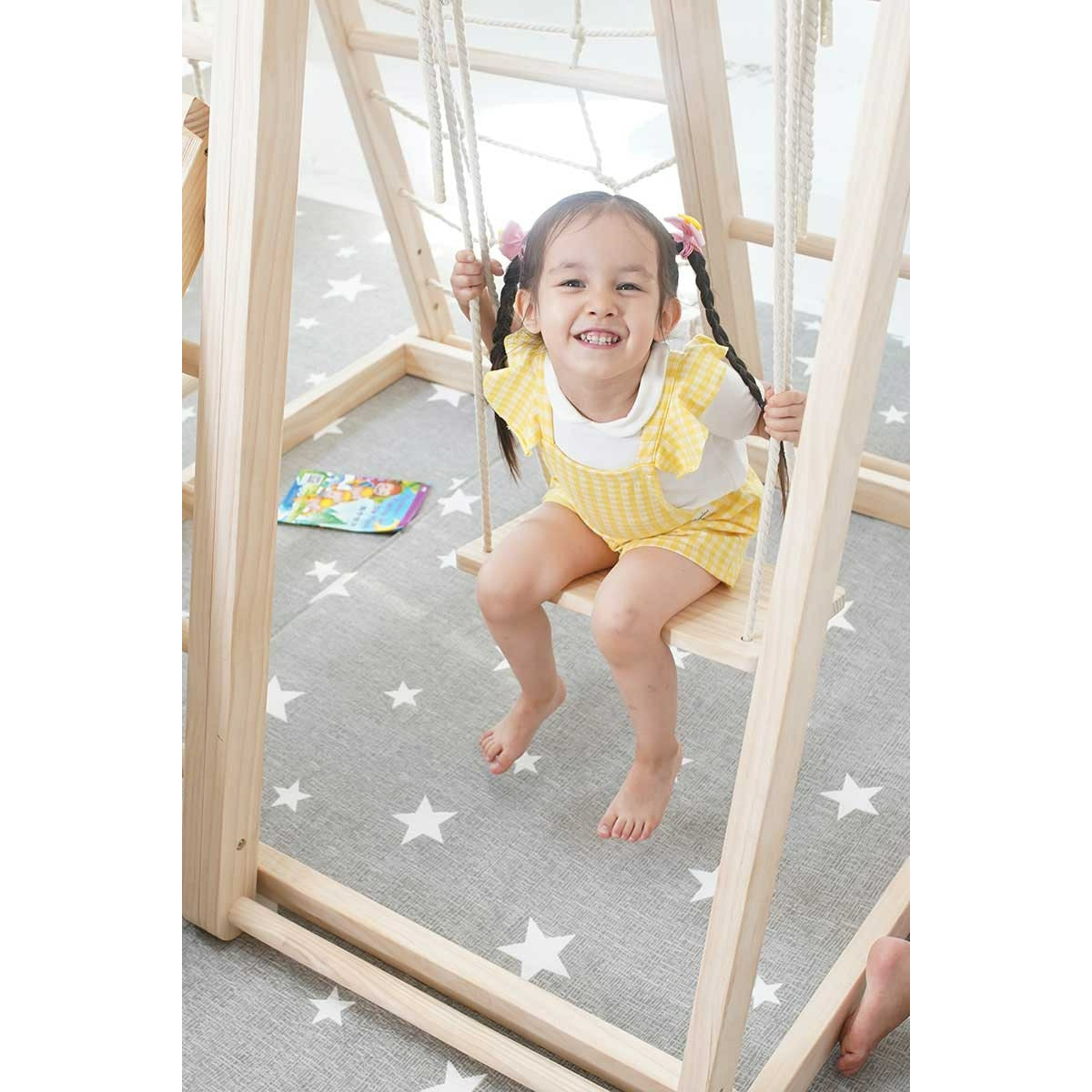
A slide they return to again and again. A climbing route that becomes a little more adventurous. A quiet corner that turns into a shop, a café or a home.
An indoor playhouse can bring several kinds of play into one familiar place. Choosing one means thinking about what your child enjoys now, what they might explore next, and where it will become part of everyday life.
Here’s how to compare the options—and recognise the features that will make a difference for your family.
1. Picture where play will happen
Start by picturing the playhouse in the room where your family spends time. It might become the centre of a playroom, sit alongside the sofa, or turn a corner into a little world of its own.
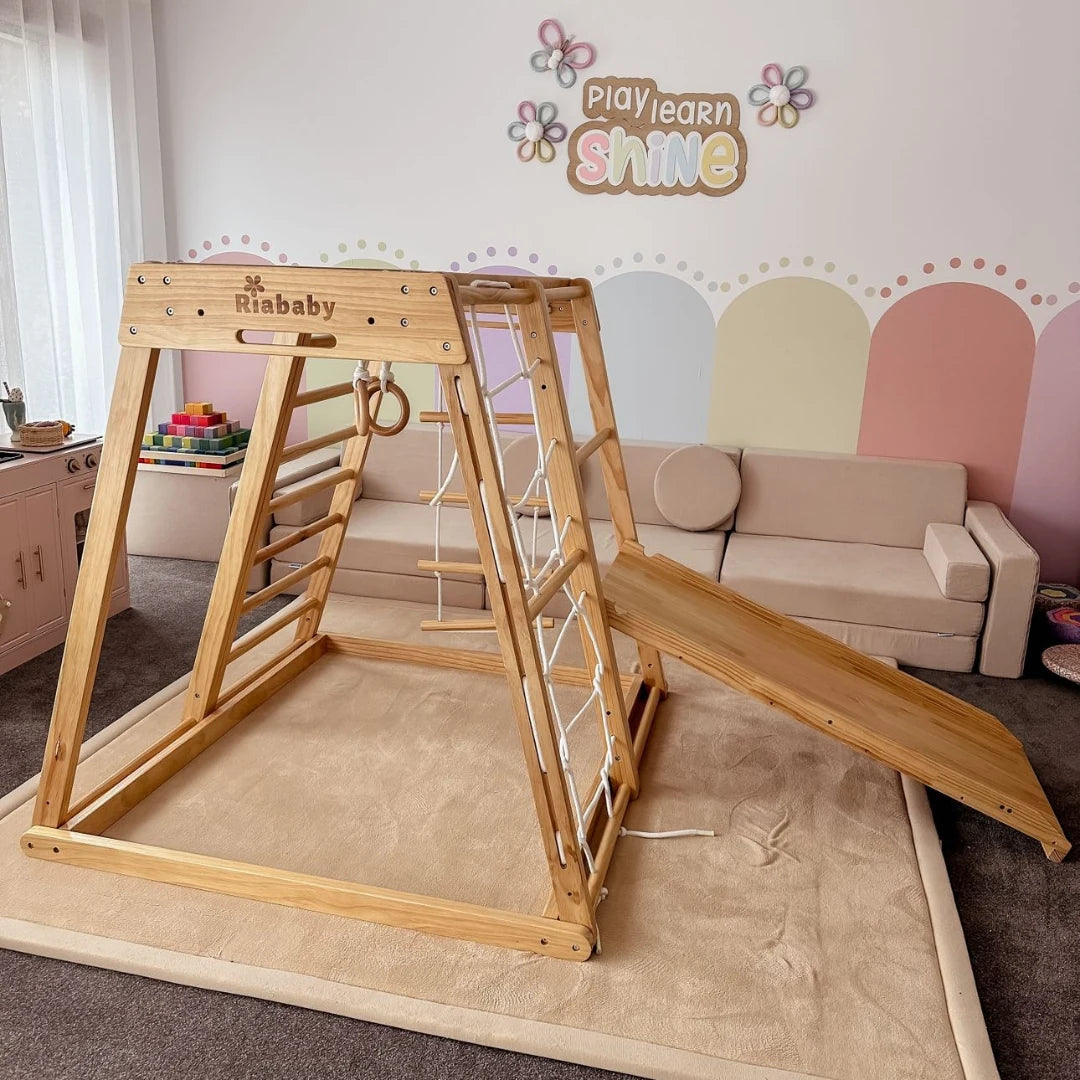
If you have room for a larger setup, that extra space can give children more to explore: different climbing routes, swinging, sliding and somewhere to draw or build. A more compact playhouse can bring a satisfying climb–crawl–slide circuit into a smaller area, while a folding frame lets a shared room change with the day.
Once you have a spot in mind, use painter’s tape to mark out the setup. Include the slide or ramp and the play clearances in the product’s instructions, rather than measuring the frame alone.
This helps you picture how the playhouse will sit alongside your furniture, where children will move, and where you can comfortably stay close as they play.
2. Watch how your child already plays
Start with the product’s current age guidance and your child’s readiness, then look at how they already like to play.
Think about what your child chooses to do when nobody is directing them.
Do they climb the sofa?
Repeat the same slide again and again?
Crawl through small spaces?
Build little shops and houses?
Set up toys for pretend meals?
Sit quietly drawing or building?
A child who constantly looks for something to climb may get far more from a climbing frame than a child who prefers creating imaginary worlds.
And the reverse is true too.
The “best” playhouse is not necessarily the one with the most features. It is the one whose features match the play your child naturally returns to.
3. Decide whether you want variety or a more focused kind of play
This is where the Riababy range starts to separate quite clearly.
Kangaroo: the long-term all-rounder
Kangaroo Playhouse is our most versatile and complete climbing playhouse, with the widest range of ways to move, imagine and play.
There is climbing, monkey-bar play, a swing and gym rings. The four play panels can be repositioned, and the reversible slide can move to a different height or turn over into a climbing ramp. Add the two included table legs and the slide becomes a low surface for drawing, blocks and building.
If you have the space, that variety makes Kangaroo the strongest long-term choice in the range. There is more room to grow into new challenges and more ways to keep using the same piece as interests change, from active climbing to quieter table play.
Think Kangaroo if: you have the space and want the most ways to play, with the most room to grow.
Koala: for a more compact climb, crawl and slide route
Koala Playhouse is designed around a clear sequence:
climb → crawl through → slide down → start again.
Its tunnel gives children a route to explore rather than simply climbing up and down a frame, while the slide can also be used as a climbing ramp.
It is more compact than Kangaroo and is designed with younger climbers in mind.
Think Koala if: you want a full climbing-playhouse experience but prefer a more compact footprint and a simple route for children to explore.
Wombat: for focused climbing and flexible floor space
Wombat Climbing Set is a more focused climbing setup.
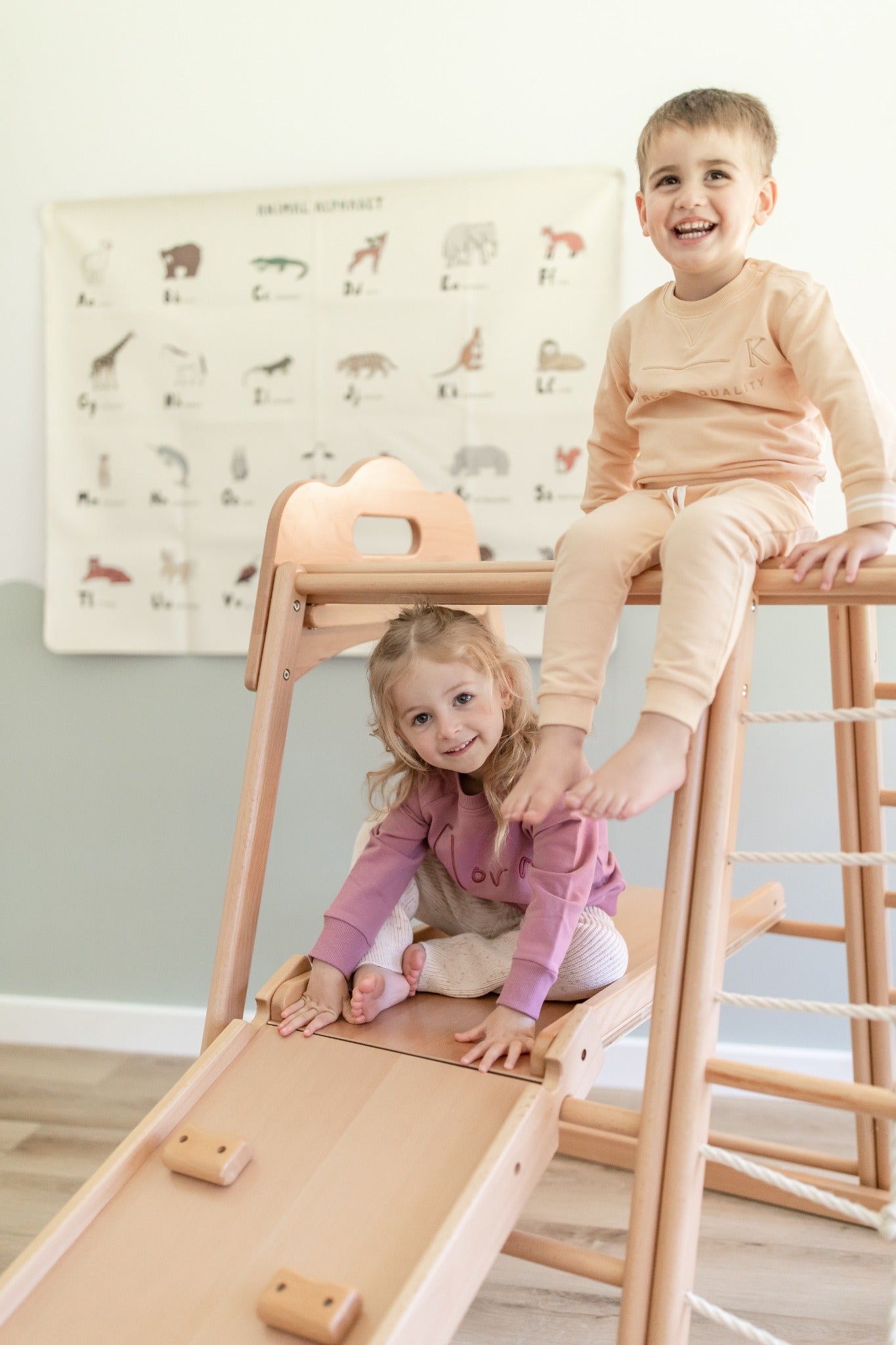
The frame changes between triangle and trapezoid configurations, and the reversible ramp offers a climbing side and a smooth sliding side. It also includes shape-sorting play.
Its biggest difference is storage: the frame folds down when playtime is over and the ramp stores separately.
That makes it particularly useful in homes where the play area shares space with everyday family life.
Think Wombat if: climbing is the main priority, but you want the option to reclaim the room afterwards.
Cubby House: for children who create little worlds
Not every child needs their main play space to be about climbing.
Some children would rather serve you a pretend lunch, draw, arrange toys, read a book or turn a small house into a café one day and a home the next.
The Riababy Wooden Cubby House is designed around that kind of imaginative play, with a tented space, table and chair, chalkboard, abacus and play sink.
Think Cubby House if: your child is naturally drawn to pretend play, drawing, little shops, homes and quieter imaginative play.

4. Think about what happens after the novelty wears off
One of the hardest questions for parents is:
“How long will they actually use it?”
There is no honest answer based only on age.
A better question is:
Can the way they use it change?
A product is more likely to stay interesting when it can support different kinds of play rather than depending on one trick.
For example:
- Kangaroo’s four configurable panels, reversible slide and table setup offer the widest range of activities as confidence and interests change.
- Koala combines climbing, crawling, sliding and lower-level play.
- Wombat can change frame configuration and ramp direction.
- A Cubby House can become almost anything a child imagines.
For families with the space, Kangaroo stands out as a long-term investment: its broader mix of functions gives children more ways to keep using it as their play develops. That flexibility gives it more ways to remain part of everyday play.
Longevity is not simply about making something physically large enough for an older child.
It is about giving children a reason to come back to it differently.
That is also why we prefer fewer, more versatile pieces of play furniture over filling a playroom with things that only do one thing.
5. Compare the four by the way they fit family life
| At a glance | Kangaroo | Koala | Wombat | Cubby House |
|---|---|---|---|---|
| Space | Roomiest climbing option | More compact | Folds away after play | Dedicated play nook |
| Main play | Climb, swing, slide, monkey bars | Climb, crawl, slide | Climb, balance, slide | Pretend and quieter play |
| Best for | Variety and room to grow | Younger climbers and smaller spaces | Flexible shared spaces | Imaginative players |
| Changes over time | Multiple configurations and activities | Different routes and uses | Frame and ramp configurations | The story changes with the child |
6. Five questions to ask before you decide
If you are still unsure, answer these before looking at another feature list.
1. Can the playhouse stay assembled most of the time? If not, look carefully at storage and folding options.
2. What does my child repeatedly choose to do? Climb, crawl, swing, build, draw or pretend?
3. Do I want one big piece to do many things, or a simpler piece that does one kind of play really well?
4. Can the way they use it change as their confidence and interests change?
5. Will this piece work comfortably in our home every day?
That last question matters more than it sounds.
A playhouse that fits naturally into family life is far more likely to be used than something impressive on paper that always feels in the way.
So which one should you choose?
There is no single playhouse that suits every family.
Choose Kangaroo if you have the space and want the widest mix of play, with the most room to grow.
Choose Koala if you want a more compact climbing playhouse with a clear climb, crawl and slide route.
Choose Wombat if climbing is the priority but you want to be able to fold the frame away.
Choose the Cubby House if your child is more interested in stories, pretend play and creating a little world of their own.
And if two options still seem equally good, choose the one that fits your home more comfortably.
Frequently asked questions
Is a bigger indoor playhouse always better?
No. More space can allow more activities, but only if the structure fits comfortably into your home. A smaller or fold-away option may receive more everyday use if it works better with the room.
What should I measure before buying an indoor climbing frame?
Measure more than the frame itself. Allow for the slide or ramp, access around the structure and enough clear space for active play and supervision.
What is the difference between a climbing playhouse and a cubby house?
A climbing playhouse is primarily designed around physical movement such as climbing, crawling, swinging and sliding.
A cubby house is more focused on imaginative play such as pretend homes, shops, drawing and quiet play.
Kangaroo or Koala: which should I choose?
Kangaroo offers more space and the widest range of activities and configurations in our climbing range, making it a strong long-term choice if you have the room.
Koala is more compact and centres around a climb → crawl → slide route designed with younger climbers in mind.
Which Riababy climbing frame is easiest to store?
Wombat is designed to fold down after play, with the ramp stored separately.
For setup, supervision and care guidance, read our Product Care & Safety information and follow the instructions for your chosen product.
Find your fit
Still deciding? Answer three quick questions in our climbing-frame finder, or compare Kangaroo, Koala and Wombat side by side. No email needed.
Help me choose Compare the climbers
Prefer a little world for pretend play? Explore the Wooden Cubby House.
You can also browse all climbing frames.
Still unsure? Send our Melbourne team your room dimensions and tell us how your child likes to play.