
Buying Guides
How Much Space Do You Need for an Indoor Climbing Frame?
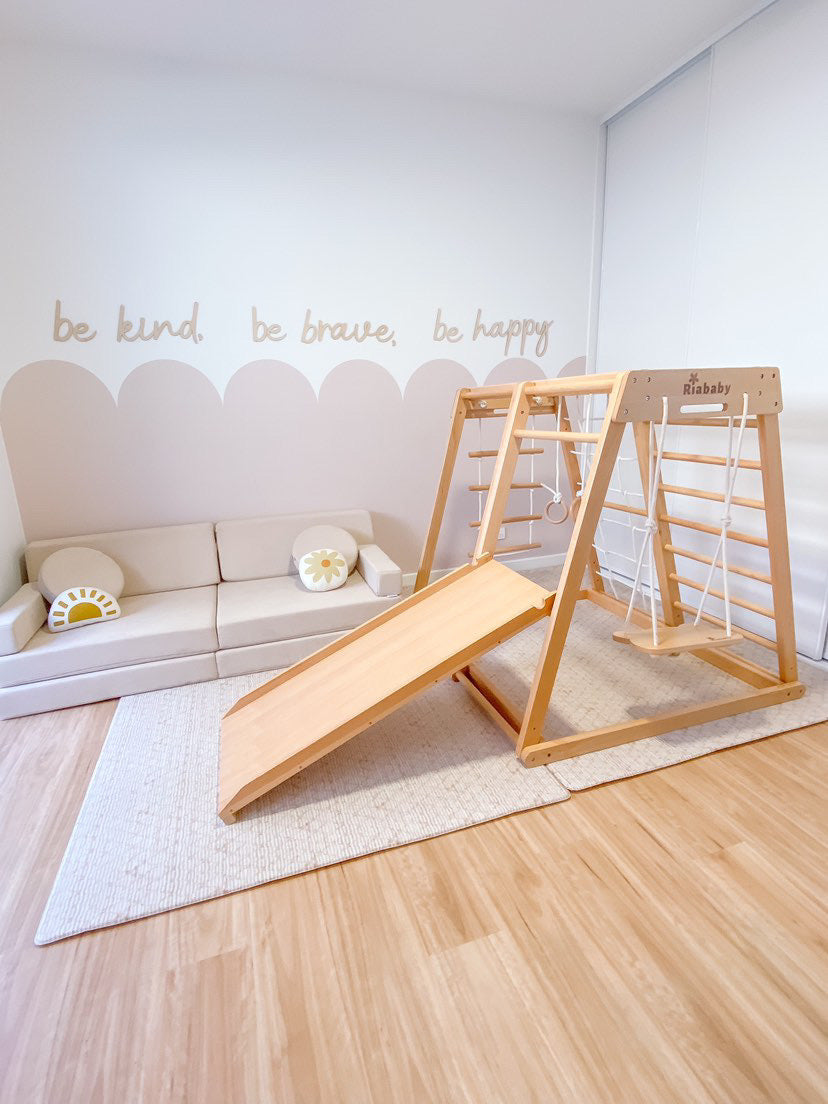
Start with the measurements. Then think about what that space could become.
An indoor climbing frame needs room for the frame, its slide or ramp, and space to use the chosen setup as shown in the instructions. There is no single minimum room size that fits every model. Start with the actual configuration you want to use and measure it against your room.
And yes, it is a substantial thing to bring home. If you’re looking around the lounge room wondering where it would go, that’s a sensible place to start. You need to know whether it fits before thinking about anything else.
How much space does the setup need?
Here are the key measurements for Riababy’s three climbing options. The frame and board measurements are listed separately for Kangaroo and Koala; Wombat’s illustrated setup length includes its ramp.
| Model | Frame or illustrated setup | Slide / ramp board |
|---|---|---|
| Kangaroo | 123 cm high; 120 cm across the base; 124 cm along the top | 121 × 53 cm, measured separately |
| Koala | 115.5 cm high; 104.6 cm deep at the base; 118.2 cm along the top | 120 × 39 cm, measured separately |
| Wombat | 68 cm high; 133.5 cm overall length including the ramp in the illustrated setup | Included in the setup length shown |
View Kangaroo and Koala dimensions
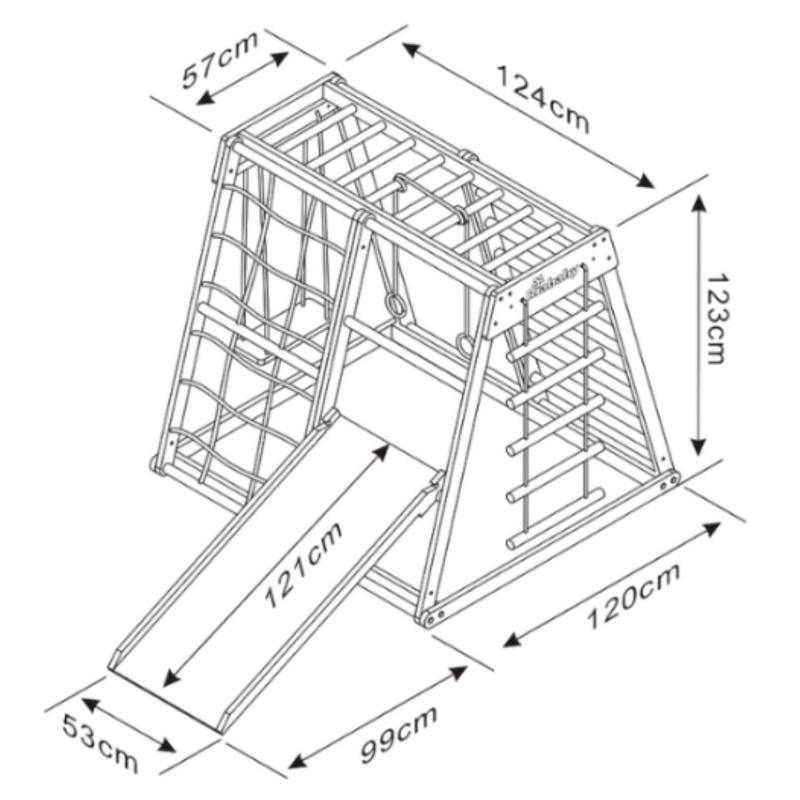

Tap a drawing to view it larger. Drawings are not shown to a common scale.
Kangaroo and Koala’s frame measurements are not the full footprint with an outward slide attached. The drawings help you see what each number describes; use the arrangement in the instructions that you’re considering for your home.
Mark it out with painter’s tape, including the slide or ramp. Then try the room as you normally use it. Open the cupboard, pull out the toy basket, walk through with the washing. Check the height too, and follow the product’s guidance for the surrounding play area and moving accessories.
If the room needs to be cleared after play, storage matters as much as the open footprint. Wombat’s frame folds to 87 cm long, 53.8 cm across the top and 30 cm high, with its ramp stored separately. Kangaroo and Koala are better planned around a spot where the main frame can stay assembled.
View Wombat open and folded dimensions
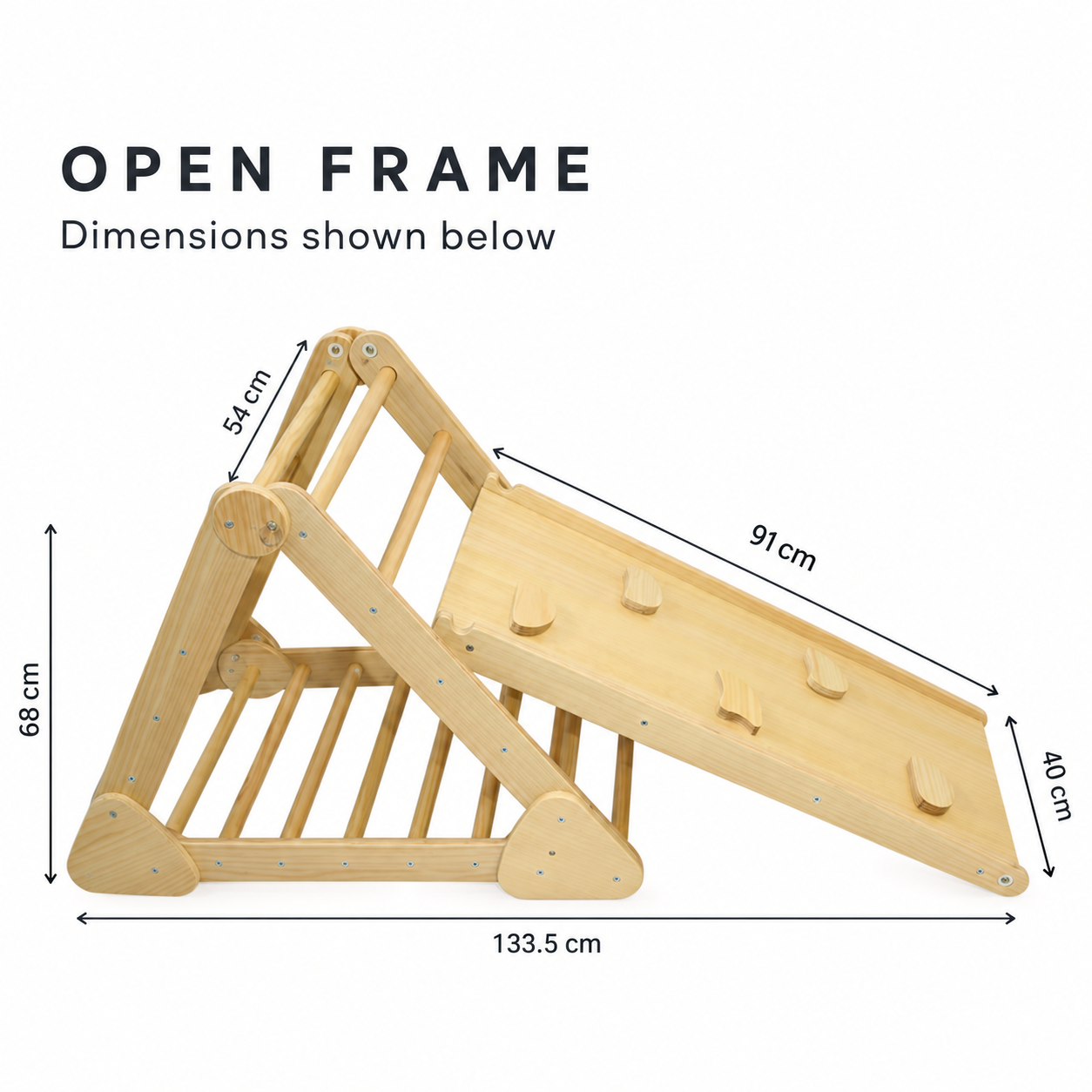
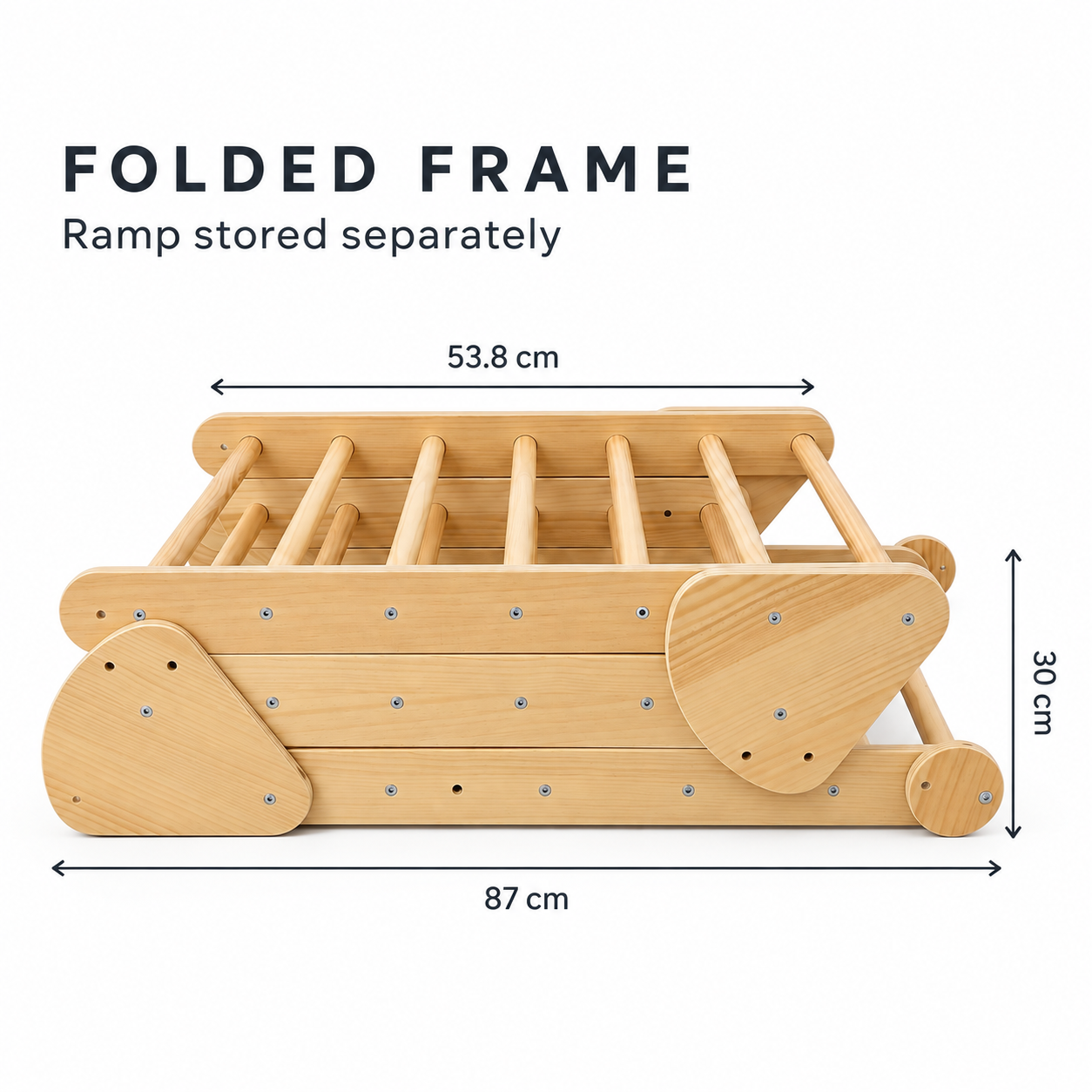
Tap a drawing to view it larger. Drawings are not shown to a common scale.
Once you’ve found an arrangement that works, you can start thinking about what you’re making room for.
There are already toys in every corner
A few cars under the sofa. A basket of blocks beside it. Something that lights up and plays a song you now know far too well. And a cardboard box that cannot possibly go in the recycling because it’s someone’s house.
Children’s things arrive gradually. A birthday present, something for a rainy afternoon, a purchase that looked brilliant online. Before long, play has spread through the house, whether you planned a playroom or not.
Some of those things are used constantly. Others were exciting for an afternoon. A few may have prompted a quiet “Why did we buy that?” before the week was out.
That’s familiar territory for plenty of parents. It’s easy to buy something for the game your child is interested in today, then buy something else when the game changes.
A climbing frame makes us stop and think because its size is obvious. Smaller purchases can take up just as much thought and space over time, but they tend to slip in one at a time.
So once the measurements work, it’s worth looking at the whole room. Which things does your child return to? Which can become part of different games? And which new purchases might you avoid if one piece could do more?
What could happen in that same space?
On a wet afternoon, a child who loves to move might want to climb, hang, slide and try it all again. Later, the pencils come out. By tomorrow, there’s a shop to run and you’ve been asked to buy three wooden blocks and a toy banana.
Active, creative and imaginative play all deserve room in family life. They don’t each have to mean buying another large piece of equipment.
This is where the design of a climbing playhouse starts to matter beyond its dimensions. A structure can provide somewhere to move, then support a quieter activity or become the setting for a made-up world.
For example, Kangaroo’s reversible board can change from a slide or climbing ramp into a low table, using the included legs at one end while the other stays attached to the frame. Koala’s platform also has a supported use as a low play surface. Those are practical ways for drawing, blocks or toy cars to move into a space already used for climbing.
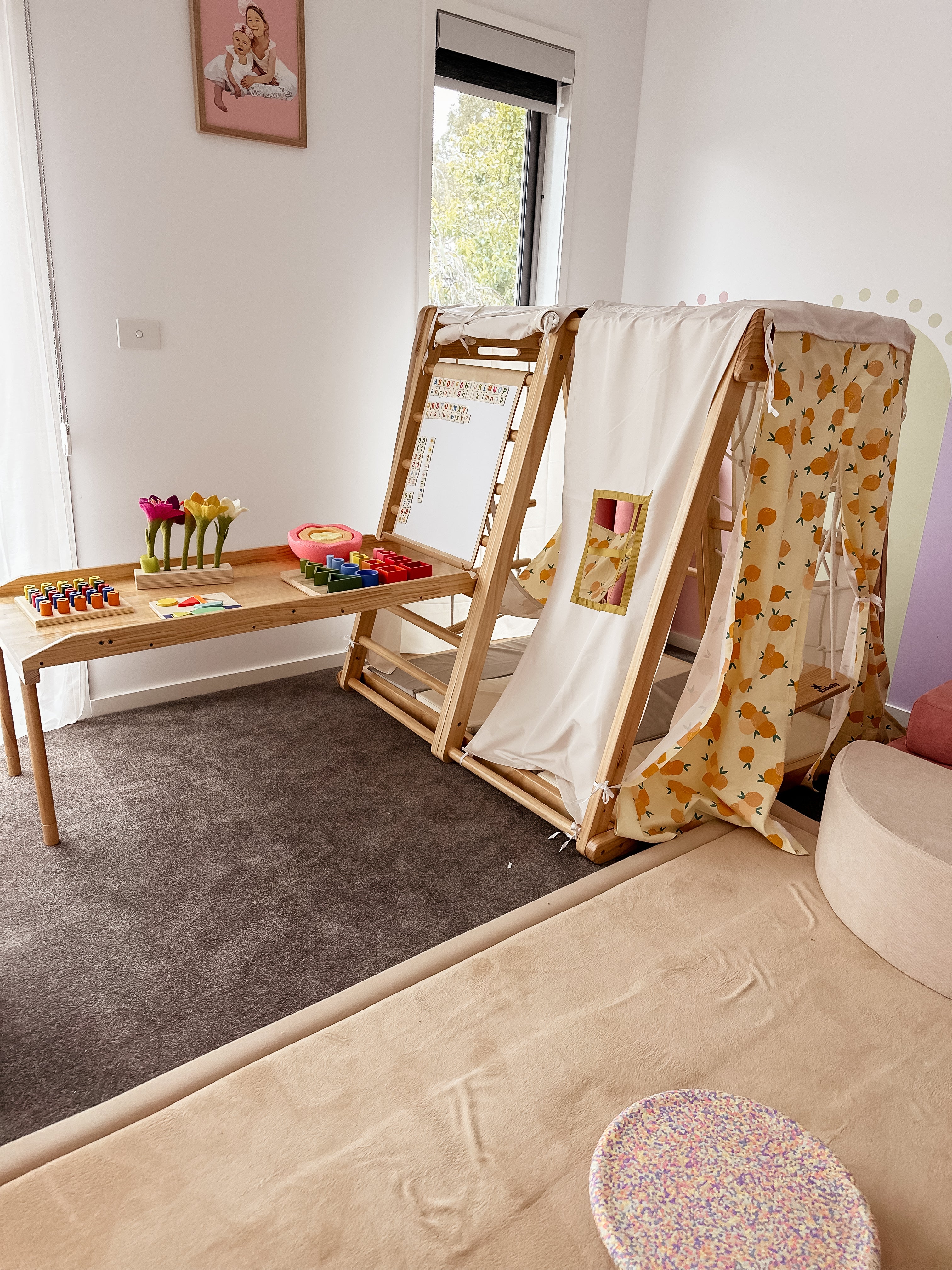
With Kangaroo’s optional compatible tent, that same frame can become a cubby setting. What happens inside might involve dolls, books, pretend food or the toys already sitting on the shelf. The tent is an optional extra, not something every family needs from the start.
The point is what those changes make possible in an ordinary home. You can give different activities a place without needing a separate large setup for each one. Adults change the configurations according to the instructions; children bring their own ideas to the play that follows.
You can explore the specific configurations on the Kangaroo and Koala pages. Here, the useful question is which of those uses you can picture becoming part of your family’s day.

A reason to come back tomorrow
Think about the toys your child keeps choosing. Often, the game isn’t finished forever when they put them down. The blocks can become something else. The dolls have another adventure. Tomorrow’s train track can take a different route.
A flexible climbing playhouse leaves room for that kind of return. There may be a movement to try again, a different route to explore, or a new story that has very little to do with climbing at all.
Raising Children Network’s low-cost play ideas show how simple materials can be used in different ways. ACECQA’s guidance on play-based learning also recognises children’s choices and ideas in play. Both are useful reminders to leave room for the child to decide what happens next.
A frame doesn’t need to supply the whole game. Sometimes it supplies the place, and familiar toys, a new interest or a sibling’s idea take it somewhere else.
That is the thinking behind offering different configurations and uses. The design gives children more ways to approach the same piece, rather than relying entirely on the excitement of something new.
No one can promise which activity your child will love next year. But you can look for a design that has somewhere to go when their interests change.
What makes it a long-term investment?
For us, a climbing playhouse earns its place through use. The climb repeated until it feels familiar. The drawing left on the table to finish later. The cubby game that needs just one more customer before dinner.
Those moments help explain its value more clearly than a long list of features. A piece that supports several things your child enjoys has several ways to fit into everyday life. As their play changes, the same space can take on a different role.
That’s also why the initial price is only part of the decision. Consider the uses you expect to make of it, how practical those changes will be, and whether it could reduce the need to keep adding separate, single-purpose equipment. Good construction and proper care matter, alongside the much simpler question of whether it will be used.
Choose the piece whose possibilities match your family. Somewhere familiar, with enough flexibility to keep finding a place in the day as play develops.

Make room for what you want to keep
The measurements still matter. You need a setup that sits comfortably in your home, wherever its place happens to be.
Beyond that, think about what you want that corner to offer: somewhere to move, somewhere to make things, somewhere a new game can begin with the toys you already have.
That is what we want a Riababy climbing playhouse to become—a well-used part of the home, with room for children’s play to change around it. Something chosen thoughtfully, cared for and returned to, rather than another thing you’re trying to find space to store.
Explore our climbing frames, or read How to Choose an Indoor Playhouse to compare the options. If you’d like help with dimensions and configurations, send our team your room measurements.